
Ayurvedic Remedies for Cold Cough
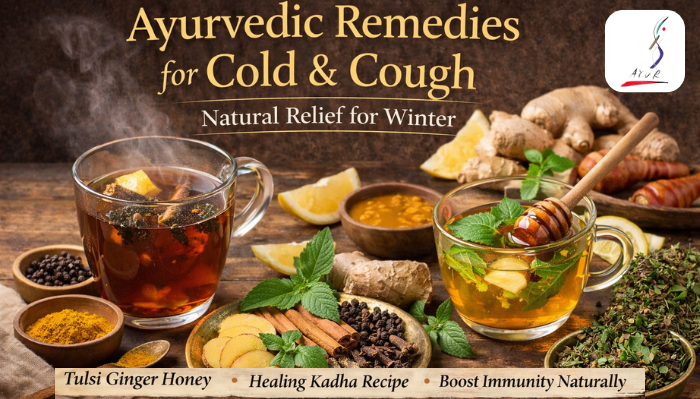
Winter sniffles rarely announce themselves politely. One day you’re fine. The next, your throat feels scratchy, your head feels heavy, and that cough just won’t let you forget it’s there.
From an Ayurvedic perspective, the colder months often invite Kapha buildup—think excess mucus, slower digestion, and congestion that tends to linger longer than we’d like. That’s why Ayurvedic remedies for cold cough usually don’t chase instant suppression. Instead, they focus on warming the body, supporting digestion, and
helping the system clear what it no longer needs—gently, steadily, and in a way that actually fits real life.
Start with warmth (before anything else)
One of the simplest—and most overlooked—shifts is temperature. When you’re under the weather, warm really is your best friend: warm water, warm soups, warm teas. Cold drinks can dampen digestive fire (Agni), and when digestion slows, Ayurveda suggests heaviness and mucus are more likely to build.
So before reaching for anything elaborate, return to the basics. Sip warm water throughout the day. Keep meals light. Rest a little more than usual. These small choices quietly set the foundation for recovery.
The comfort blend tulsi, ginger, and honey
If you grew up with home remedies, this one probably feels familiar. Tulsi ginger honey has long been used as a comforting blend during seasonal discomfort.
Tulsi (holy basil) is traditionally used to support the respiratory system and ease that “blocked” or congested feeling. Ginger brings warmth—often welcome when chills or throat irritation creep in. Honey is valued for its soothing quality, especially when the throat feels dry or raw.
One small detail matters here: always add honey after the drink has cooled to warm, not boiling. This keeps the routine gentle and the flavor smooth.
Simple method (2–3 times daily):
● Warm water or herbal tea
● A few tulsi leaves (or tulsi tea)
● Fresh ginger slices or grated ginger
● Honey (added at the end)
Sip it slowly. This isn’t something to gulp down like medicine—it’s meant to feel comforting as well as supportive.
A classic kadha recipe for winter
When congestion feels thicker—or when you want something deeper and more aromatic—a kadha recipe is a traditional go-to. Kadha is a herbal decoction where spices and herbs simmer together, allowing the water to absorb their warmth and intensity.
It’s especially popular in the evening, when heaviness tends to settle in.
Easy kadha recipe (serves 1–2):
● 2 cups water
● 1–2 inch fresh ginger, sliced
● 6–10 tulsi leaves (or 1 tulsi tea bag)
● 4–6 black peppercorns, lightly crushed
● 1 small cinnamon stick (or a pinch of powder)
● 2 cloves
● Optional: a pinch of turmeric
● Optional: a tiny piece of jaggery or honey (added at the end)
How to make it:
1. Add all ingredients except honey to a pot with water.
2. Simmer for 10–15 minutes, until slightly reduced and fragrant.
3. Strain into a cup and let it cool slightly.
4. Add honey only when warm, not boiling.
If you’re sensitive to spices, start gently—less pepper, fewer cloves. The goal is warmth and relief, not irritation.
Winter immunity Ayurveda: prevention that actually feels doable
Here’s the truth: you can’t out-supplement a season. Winter immunity Ayurveda isn’t built around one magic ingredient—it’s about stacking small, repeatable habits that keep you steady even as the weather shifts.
Try these realistic, everyday practices:
● Start your day warm: Porridge, soup, or stewed fruit is often easier on digestion than cold cereal or smoothies in winter.
● Steam when you feel blocked: Gentle steam inhalation can feel deeply comforting for nasal congestion.
● Cover your neck and chest outdoors: It sounds simple, but protecting these areas from cold wind can make a difference—especially if throat issues are common for you.
● Sleep a little earlier: Even 30–45 extra minutes can help when your body is fighting something off.
● Choose lighter dinners: Warm soup, khichdi, or cooked vegetables can help prevent that heavy, mucus-like feeling at night.
● Support digestion: In Ayurveda, digestion is central. If appetite is low, opt for smaller, warm meals instead of forcing heavy food.
None of this requires perfection. These habits work best when they’re easy enough to repeat.
When your cold feels “dry” vs. “wet”
Not all colds feel the same, and Ayurveda often looks at qualities rather than labels.
● Dry, scratchy, irritating cough: Emphasize soothing warmth—warm teas, humidified air, gentle soups, and throat-friendly routines like tulsi ginger honey.
● Wet, heavy congestion with mucus: Focus on lightness and heat—your kadha recipe, warm water, lighter meals, and temporarily reducing dairy or very oily foods. This isn’t a rigid rulebook. Think of it as a guide for choosing what feels supportive today.
A gentle reminder from Sidhayur
At Sidhayur, we often remind clients that the best Ayurvedic remedies for cold cough are the ones you’ll actually use—simple, cozy, and consistent. You don’t need a long
checklist or complicated routines.
- Start with one warming drink.
- Add one supportive meal choice.
- Choose one daily habit, like steam inhalation or earlier sleep.
If symptoms keep returning, linger longer than usual, or come with significant fatigue, it may be worth looking deeper. Diet, sleep, stress, and seasonal routines often play a bigger role than people realize.
FAQs
Q1. What are the best Ayurvedic remedies for cold cough at home?
Ans. Warm fluids, light meals, steam inhalation, and soothing blends like tulsi ginger honey are commonly used. Many people also rely on a kadha recipe during winter congestion.
Q2. What is an easy kadha recipe for winter?
Ans. Simmer ginger, tulsi, black pepper, cinnamon, and clove in water for 10–15 minutes. Strain, let it cool slightly, and add honey if desired.
Q3. How does winter immunity Ayurveda approach prevention?
Ans. Winter immunity Ayurveda emphasizes warmth, steady digestion, good sleep, and consistent daily habits to reduce Kapha buildup and support resilience through seasonal changes.
Q4. When should I seek medical help for a cold or cough?
Ans. If symptoms are severe, last more than a week, include high fever, breathing difficulty, chest pain, or worsening weakness, consult a qualified healthcare professional.
Categories
- Categories
- Blog (27)
- Information (62)
- News (7)
Latest Post
- Ayurvedic Treatment for Perimenopause and Menopause Support
- Why Ayurveda Is the Future of Wellness Centers in New York City
- How Ayurveda Helps Nervous System Regulation and Stress Recovery
- Ayurvedic Treatment for Inflammation in NYC | Restore Balance
- Ayurvedic Women’s Health Consultation NYC: A Natural Path to Hormone Balance
- Top Ayurvedic Practices to Boost Immunity